Home insurance
Your home represents one of the most significant investments you’ll make in your lifetime, yet many homeowners struggle to fully understand how to protect it properly. Home insurance isn’t simply a contractual obligation required by mortgage lenders—it’s a comprehensive financial safety net designed to shield you from potentially devastating losses. From catastrophic fires and natural disasters to more common perils like water damage and theft, the right coverage ensures that an unexpected event doesn’t derail your financial stability.
The challenge lies in navigating a complex landscape of policy types, coverage limits, exclusions, and endorsements. What’s the difference between market value and replacement cost? When do you need additional riders for valuable possessions? How can preventive maintenance actually impact your coverage validity? This comprehensive resource addresses these fundamental questions and more, providing you with the knowledge to make informed decisions about protecting your residential property, belongings, and financial future.
Understanding Core Coverage Types and Policy Structures
Home insurance policies fall into two primary categories: single-peril policies and multi-risk contracts. Single-peril policies cover only specifically named dangers—for instance, fire-only coverage or theft-only protection. While these policies typically cost less upfront, they leave significant gaps in your protection. If a windstorm damages your roof but you only carry fire insurance, you’ll bear the entire repair cost yourself.
Multi-risk or “all-risk” policies take the opposite approach, covering all perils except those explicitly excluded in the contract. These comprehensive policies protect against fire, wind, hail, lightning, theft, vandalism, and numerous other threats. The exclusions typically include floods, earthquakes, war, and normal wear and tear. Understanding what your policy excludes is just as crucial as knowing what it covers.
Bundled protection policies offer another strategic advantage by combining home insurance with other coverage types—most commonly auto insurance. Beyond the obvious premium discount (often between 15-25%), bundling simplifies the claims process by consolidating everything with a single insurer. You’ll work with one adjuster, follow one set of procedures, and avoid the risk of overlapping coverage that can complicate reimbursement. However, bundling isn’t always the most cost-effective option, so comparing bundled offers from different providers remains essential before committing.
Protecting Your Home’s Physical Structure
The physical integrity of your property directly influences both your coverage validity and your financial protection. Many homeowners don’t realize that insurance contracts contain an often-overlooked requirement: proper maintenance. This isn’t merely a suggestion—it’s a contractual obligation that can void your coverage if neglected.
The Maintenance-Coverage Connection
Insurance policies are designed to protect against sudden and accidental damage, not gradual deterioration from neglect. If a decades-old roof finally fails during a rainstorm, your insurer may deny the claim by demonstrating that deferred maintenance—not the storm—caused the damage. The most frequent maintenance mistake homeowners make is postponing minor repairs until they become major problems. A small roof leak ignored for months can evolve into extensive water damage, mold growth, and structural issues that exceed coverage limits or fall under maintenance-related exclusions.
Scheduling regular inspections provides early detection of potential issues before they escalate. Professional inspections of your roof, HVAC system, plumbing, and electrical systems every few years create documentation that demonstrates responsible homeownership. This documentation proves invaluable if you ever need to defend a claim against a maintenance-related denial.
Replacement Cost Versus Market Value
One of the most critical distinctions in home insurance involves how your property is valued. Market value represents what a buyer would pay for your home in its current condition, including the land. Replacement cost represents what it would actually cost to rebuild your home from the ground up if it were completely destroyed, excluding the land value (which doesn’t need “replacing”).
These figures can differ dramatically. In appreciating real estate markets, your home’s market value might be substantially higher than its replacement cost. Conversely, older homes with unique architectural features or premium materials may cost far more to rebuild than their market value suggests. Ensuring the rebuilding cost is fully covered requires periodic reassessment, particularly after completing home improvements or when construction costs fluctuate significantly.
Guaranteed Replacement Cost coverage offers the most comprehensive protection by paying to rebuild your home regardless of the policy limit, even if construction costs exceed your coverage amount. While this premium option costs more, it eliminates the risk of being underinsured. Without it, you might face the co-insurance penalty—a provision that reduces your payout proportionally if you’re underinsured at the time of loss.
Building Codes and Post-Loss Upgrades
Building codes evolve constantly, and your home was constructed under the standards in effect at that time. If a fire destroys your property, rebuilding to current code requirements may necessitate upgrades to electrical systems, structural reinforcements, or energy efficiency standards. Standard policies often cap building code upgrade coverage at 10% of the dwelling limit. Evaluating the cost-benefit of protective installations and securing adequate building code coverage can prevent significant out-of-pocket expenses during reconstruction.
Valuing and Insuring Personal Possessions
While dwelling coverage protects your home’s structure, personal property coverage safeguards your belongings—furniture, electronics, clothing, appliances, and other possessions. Standard policies typically provide coverage equal to 50-70% of your dwelling limit, but this comes with important limitations that many homeowners discover only after filing a claim.
Understanding the Depreciation Gap
Most standard policies cover personal possessions on an actual cash value basis, which means replacement cost minus depreciation. If your five-year-old laptop is stolen, you won’t receive enough to buy a new equivalent model—you’ll receive its depreciated value, which might be only 30-40% of a new one. This depreciation gap can leave you significantly undercompensated, particularly for electronics, furniture, and appliances that depreciate rapidly.
Upgrading to replacement cost coverage for personal property eliminates this gap by reimbursing you for the cost of buying new items of similar kind and quality. While this endorsement increases your premium by approximately 10-15%, it provides substantially better protection for your actual financial needs after a loss.
Special Riders for High-Value Items
Standard policies impose sub-limits on certain categories of valuables. Jewelry might be capped at $1,500 total, fine art at $2,000, and collectibles at $2,500—regardless of their actual value. If you own items exceeding these thresholds, deciding on specific riders for valuables becomes essential. These riders, also called floaters or endorsements, provide broader coverage without deductibles for specifically scheduled items.
Creating an irrefutable home inventory is the foundation of effective personal property coverage. Document every valuable item with photographs, receipts, serial numbers, and appraisals. Store this inventory outside your home—in cloud storage or a safe deposit box—so it survives any disaster that might destroy your property. Avoiding proof-of-ownership failures during the claims process requires this proactive documentation, as insurers rightfully require evidence that you actually owned what you’re claiming.
Remember to update your coverage after major life events. Inheritances, marriages, significant purchases, or receiving valuable gifts all change your insurance needs. An annual review ensures your coverage grows alongside your possessions.
Water Damage: Prevention and Coverage
Water damage consistently ranks as the most frequent home insurance claim, accounting for nearly one in three homeowner claims. The financial impact averages several thousand dollars per incident, making prevention and proper coverage essential components of your risk management strategy.
The challenge with water damage lies in diagnosing the source of invisible leaks before they cause extensive damage. Water often travels along structural elements, appearing far from its actual entry point. A leak originating in a second-floor bathroom might manifest as ceiling damage in a first-floor room, obscuring the true source. This is why preventing common winter pipe bursts through proper insulation and maintaining adequate heat during freezing temperatures provides such significant value—frozen pipes can release hundreds of gallons when they rupture.
Standard home insurance covers sudden and accidental water damage from sources like burst pipes, appliance malfunctions, or roof damage from storms. However, it typically excludes gradual leaks, seepage, and almost universally excludes flooding from external sources. Choosing the right water damage endorsement depends on your specific risks. If you live in a flood-prone area, you’ll need separate flood insurance through the National Flood Insurance Program or private insurers, as standard policies won’t cover rising water from storms, overflowing rivers, or storm surge.
When water damage occurs, documenting it correctly makes an enormous difference in claim outcomes. Photograph everything before beginning cleanup, document the water source, and take reasonable steps to mitigate damage immediately after an incident. Your policy requires you to prevent further damage once you’re aware of the problem—failing to do so can reduce your settlement. This means placing buckets under active leaks, turning off water supplies, and removing valuables from affected areas, but it doesn’t require you to make permanent repairs before the adjuster’s inspection.
Fire, Smoke, and Major Perils
Fire coverage forms the cornerstone of home insurance, as fire-related losses can completely destroy a property within hours. However, the technical breakdown of major peril guarantees reveals important nuances in how different fire-related damages are treated.
Policies differentiate between various fire sources and their coverage implications. A cooking fire that spreads from your stove receives full coverage, while a wildfire approaching your property might trigger different policy provisions or deductibles. Understanding these distinctions helps you prepare appropriately and avoid surprises during the claims process. One often-overlooked aspect involves preventing electrical fire claims denials by maintaining electrical systems properly and addressing warning signs like frequently tripping breakers, flickering lights, or burning odors.
Smoke damage often exceeds the fire damage itself, permeating fabrics, carpets, walls, and HVAC systems. Optimizing recovery after smoke damage requires professional remediation to eliminate odors and residue—soot particles contain acidic compounds that continue damaging surfaces long after the fire is extinguished. Your policy should cover both the fire damage and the necessary smoke remediation, including temporary housing if your home becomes uninhabitable.
Many policies impose a post-disaster waiting period or specific claims procedures for major losses. Understanding these requirements beforehand streamlines the recovery process when you’re already dealing with significant stress. Comparing deductibles for specific perils also matters—some policies apply higher deductibles for wind or hail damage than for fire, affecting your out-of-pocket costs depending on the loss type.
Natural Disasters and Catastrophic Events
Catastrophic environmental events require specialized coverage beyond standard home insurance policies. Securing property against floods, earthquakes, hurricanes, and other major disasters involves understanding which coverage comes standard, which requires endorsements, and which demands entirely separate policies.
Most standard policies exclude earth movement of all types—earthquakes, landslides, mudslides, sinkholes, and ground settling. If you live in a seismically active region, earthquake insurance becomes essential. Similarly, flooding from external sources requires separate coverage, regardless of whether you live in a designated flood zone. Understanding zoning and risk assessment helps you evaluate your actual exposure and make informed decisions about purchasing additional protection.
Navigating government versus private insurance options presents another layer of complexity. Federal programs like the National Flood Insurance Program provide baseline flood coverage with standardized terms and pricing, while private insurers increasingly offer competitive alternatives with potentially higher limits and additional features. The “Force Majeure” trap—policy language that might limit coverage for “acts of God” or unforeseeable circumstances—rarely applies to standard perils but can appear in certain contract provisions, making careful policy review essential.
Preparing a property for immediate resilience through physical defense strategies—hurricane shutters, reinforced roofing, seismic retrofitting, flood barriers—not only reduces your risk of loss but may also qualify you for premium discounts. Many insurers reward proactive risk reduction with measurable rate reductions.
Theft, Burglary, and Security Measures
Coverage for criminal acts protects against financial losses from theft, burglary, and vandalism, but the specific definitions matter significantly. Understanding the definition of burglary under your policy—typically requiring forced entry evidence—differs from theft, which doesn’t require force. This distinction can impact claim approvals in situations where entry methods are unclear.
Improving security to lower premiums offers a tangible return on investment. Installing monitored alarm systems, deadbolt locks, security cameras, and smart home security devices can reduce your premiums by 5-20% while simultaneously reducing your risk of victimization. Many insurers offer specific discounts for documented security improvements, making them both a protective measure and a cost-saving strategy.
Standard policies typically provide limited coverage for items in transit or storage, often capping reimbursement at 10% of your personal property limit for possessions temporarily away from home. If you’re storing valuable items during a move or renovation, verify your coverage limits and consider additional protection if needed. Avoiding negligence during vacations—stopping mail delivery, using timers for lights, arranging for property checks—not only deters criminals but also demonstrates reasonable precautions that support coverage validity. Handling vandalism on exterior property follows similar principles, with coverage generally applying to malicious damage but excluding wear, tear, or damage from lack of maintenance.
Home insurance represents far more than a mandatory expense—it’s a comprehensive risk management tool that requires active engagement to maximize its value. By understanding coverage types, maintaining your property diligently, documenting your possessions thoroughly, and selecting appropriate endorsements for your specific risks, you transform a standard policy into true financial protection. The key lies in treating insurance as an ongoing relationship rather than a set-it-and-forget-it product, regularly reviewing your coverage as your circumstances evolve and your property’s value changes.

How to Prove Theft and Get Reimbursed Without Forced Entry Signs?
Contrary to what insurers might imply, a lack of forced entry doesn’t automatically kill your theft claim. Proving theft is about building a compelling ‘circumstantial narrative’ that makes it the only logical explanation. Digital breadcrumbs from smart devices, access logs,…
Read more
How to Verify Your Fire and Flood Guarantees Are Actually Comprehensive?
Your policy’s real value isn’t its coverage amount, but its specific, often-hidden ‘failure points’ that can nullify a claim. Policy language is designed to limit liability; terms like “hostile fire” and “diligent pursuit” are critical failure points. Standard coverage limits…
Read more
How to Estimate Rebuilding Costs When Construction Prices Skyrocket?
The market value of your home is irrelevant; its true insurable value is a precise calculation of materials, labor, and regulatory costs required for a total rebuild. Skyrocketing construction costs and outdated policies mean most homeowners, especially those in older…
Read more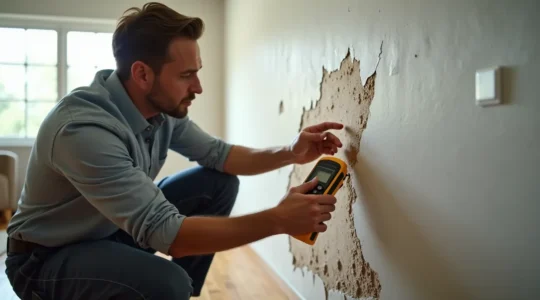
How to Handle a Water Leak Claim Without Triggering a Premium Hike?
The key to filing a water damage claim without a premium hike isn’t just about reporting the incident, but about strategically proving you are a responsible, low-risk homeowner. Your insurance policy is designed to cover “sudden and accidental” damage, not…
Read more
How to Insure Your Home Against Unpredictable Climate Events?
Relying on standard home insurance to protect you from modern climate events is a critical financial error; the system was not designed for today’s volatility. Official risk data, like flood maps, are dangerously outdated and fail to capture your property’s…
Read more
Why Switching to a Multi-Risk Policy Simplifies Claims for Busy Families?
A multi-risk policy’s true value isn’t the discount, but its power to transform claim chaos into a single, manageable process. It eliminates “claim friction” by consolidating everything into one point of contact, one adjuster, and often one deductible. Strategic bundling…
Read more
How to Calculate the True Replacement Value of Your Belongings?
In summary: Standard insurance policies use ‘Actual Cash Value’ (ACV), which subtracts depreciation and often leads to significant underpayment on claims. Creating a digital home inventory with modern AI tools is the fastest and most effective way to build a…
Read more
How to Fortify Your Home Against Climate Risks Without Breaking the Bank?
Fortifying your home against climate change is less about expensive overhauls and more about strategic, documented maintenance that satisfies insurers. Proving consistent maintenance with a logbook is as crucial as the work itself to prevent claim denials. Targeted upgrades, such…
Read more